

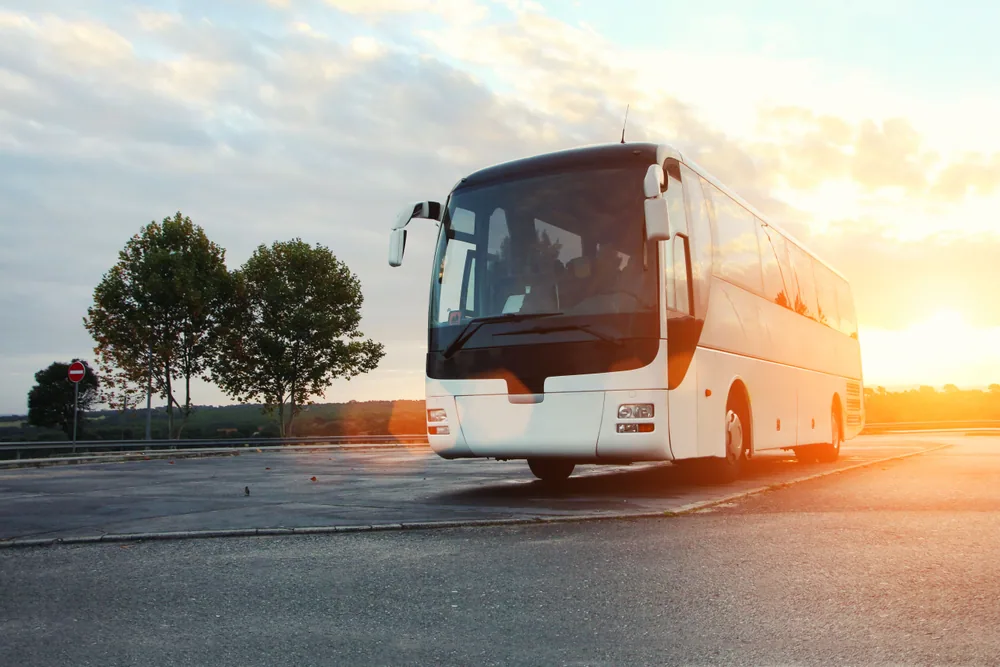
Fleet operators
Buses, coaches, haulage and machinery. Know about a fire on the road as it happens, wherever the vehicle is, with the position the fire service needs.
Firealert puts a monitored fire alarm in your trucks, buses and buildings. Alarms reach your team by app, email and web, keep escalating until someone acknowledges, and can go straight to the nearest fire station with the live location.
What fire research says about buses and coaches.
Source: SP Technical Research Institute of Sweden, bus and coach fire safety study, as reported in Fire Engineering (2012). Swedish data.
How it works
From a sensor in the engine bay to a fire station's screen, every step is recorded, and nobody has to remember to pass it on.
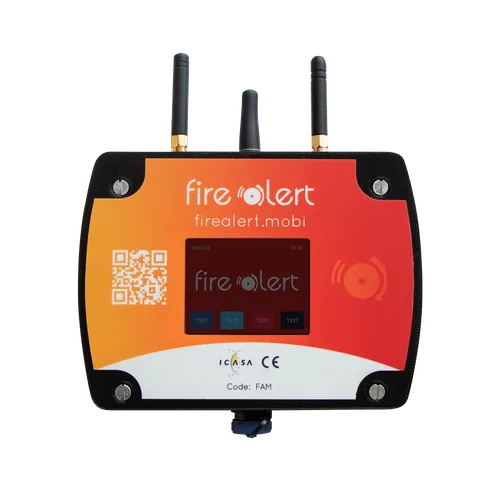
A Firealert device in the vehicle or building reports fire, smoke and panic alarms over the mobile network, along with temperature, battery, signal strength and GPS position.
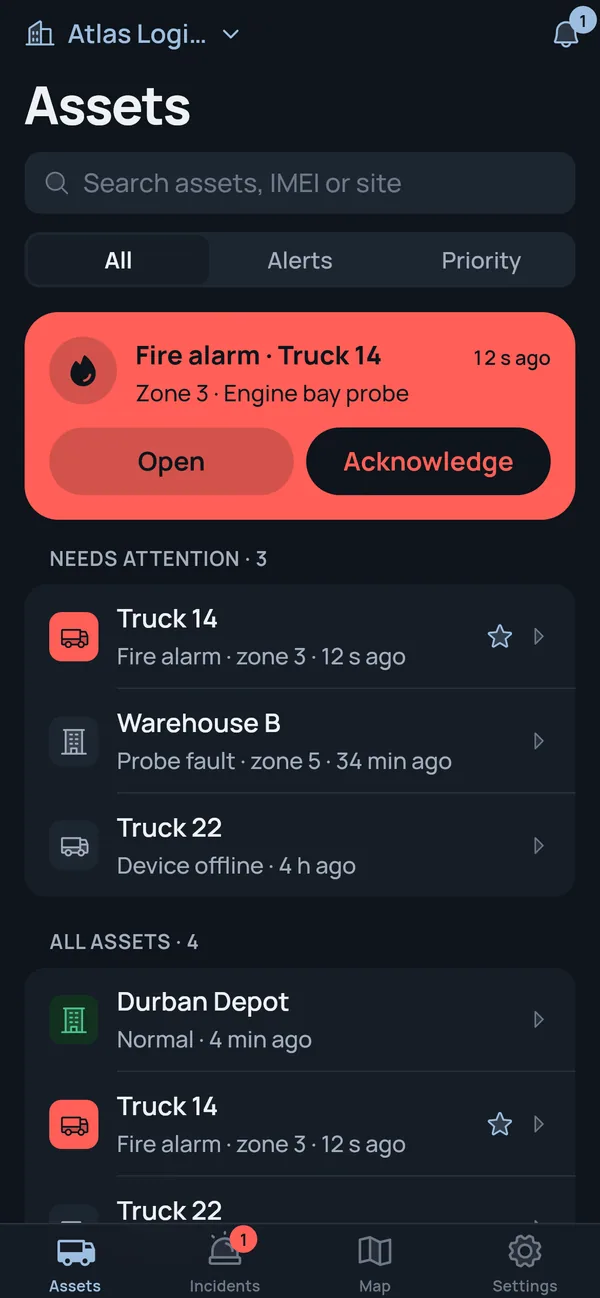
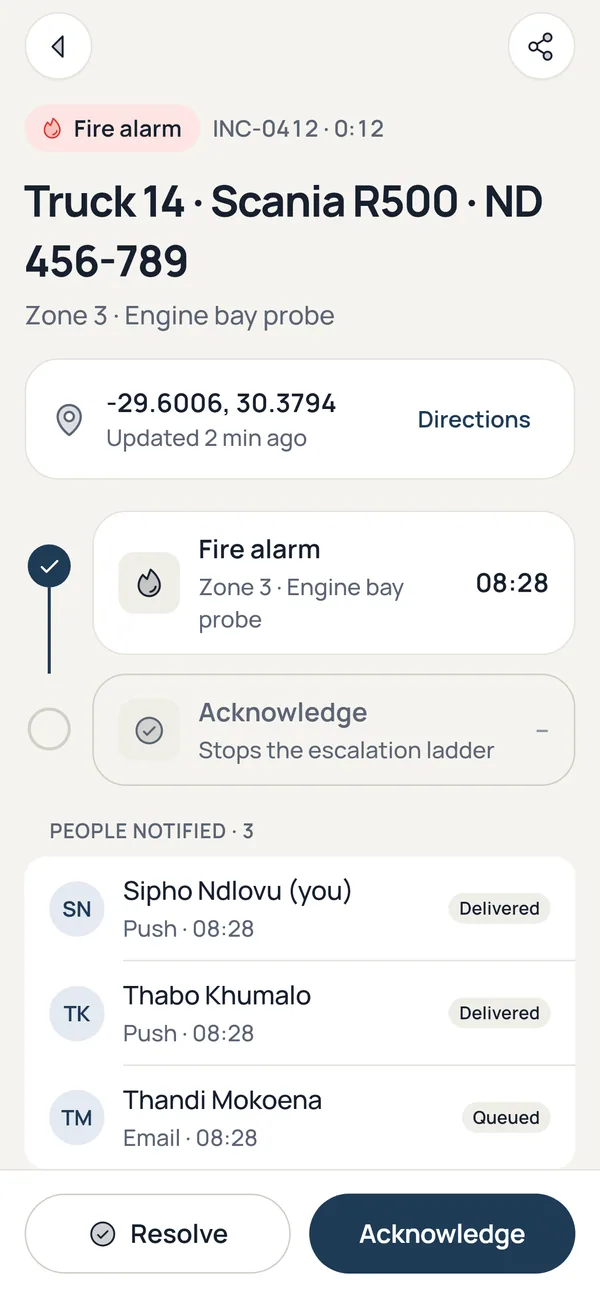
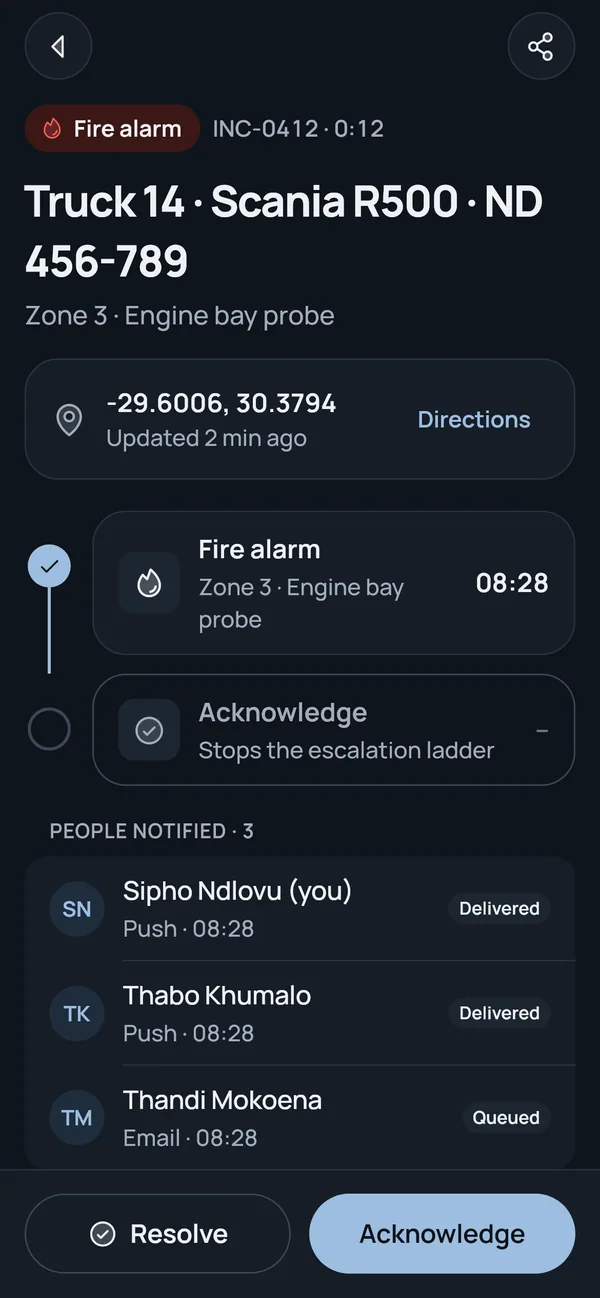
Everyone on the first stage gets a push notification and an email at once. On the phone, a fire alarm takes over the screen until someone deals with it.
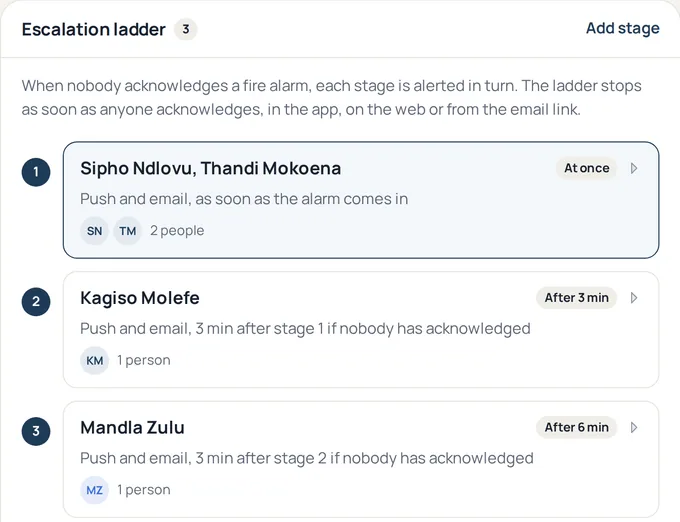
If nobody responds, the next people are alerted, then the next, on the delays you set. Acknowledging in the app, on the web or from the email link stops the ladder.
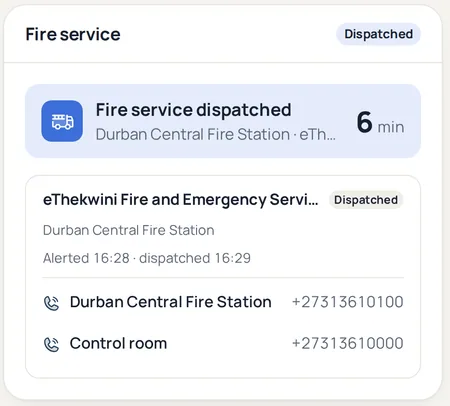
Fire, smoke and panic alarms can go to the responsible station's console with the live position. The station accepts, dispatches, and you see each step in the incident.
Owner web app
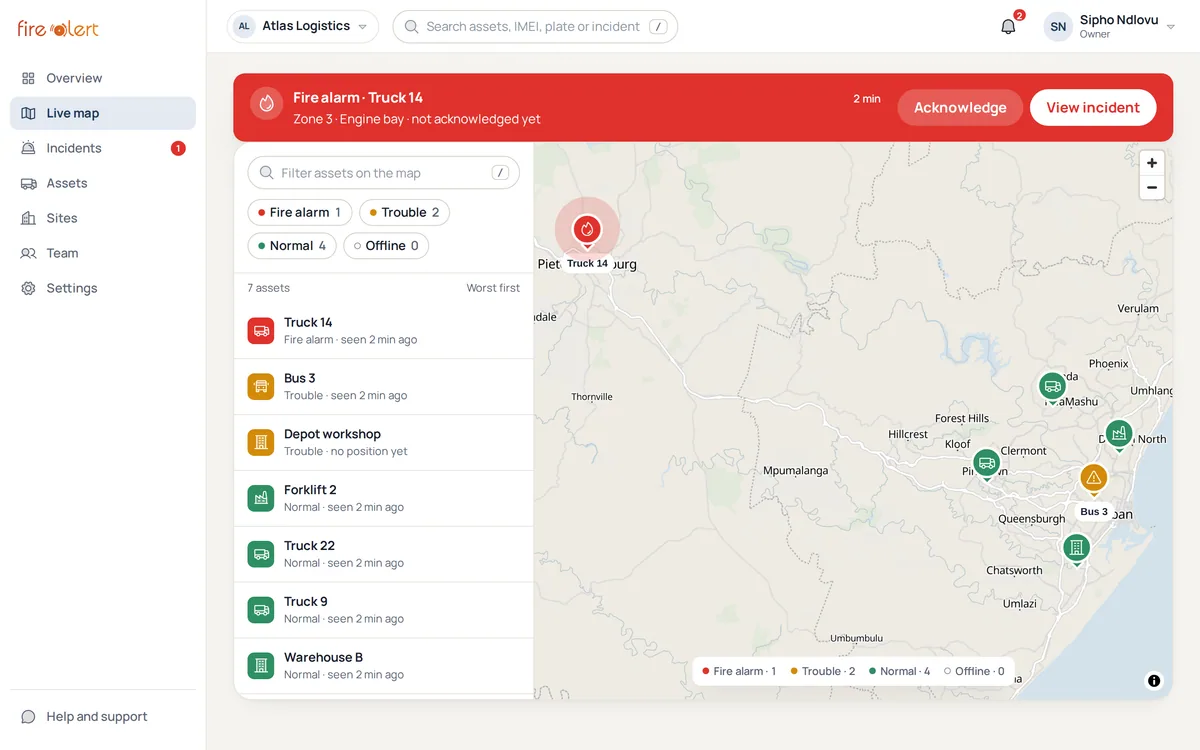
Every vehicle and building on one live map, every alarm with its full story, and the alert rules your team actually agreed on.
Every asset at its last position, coloured by state. Replay any day's trip with its stops and events, and export it as GPX or CSV.
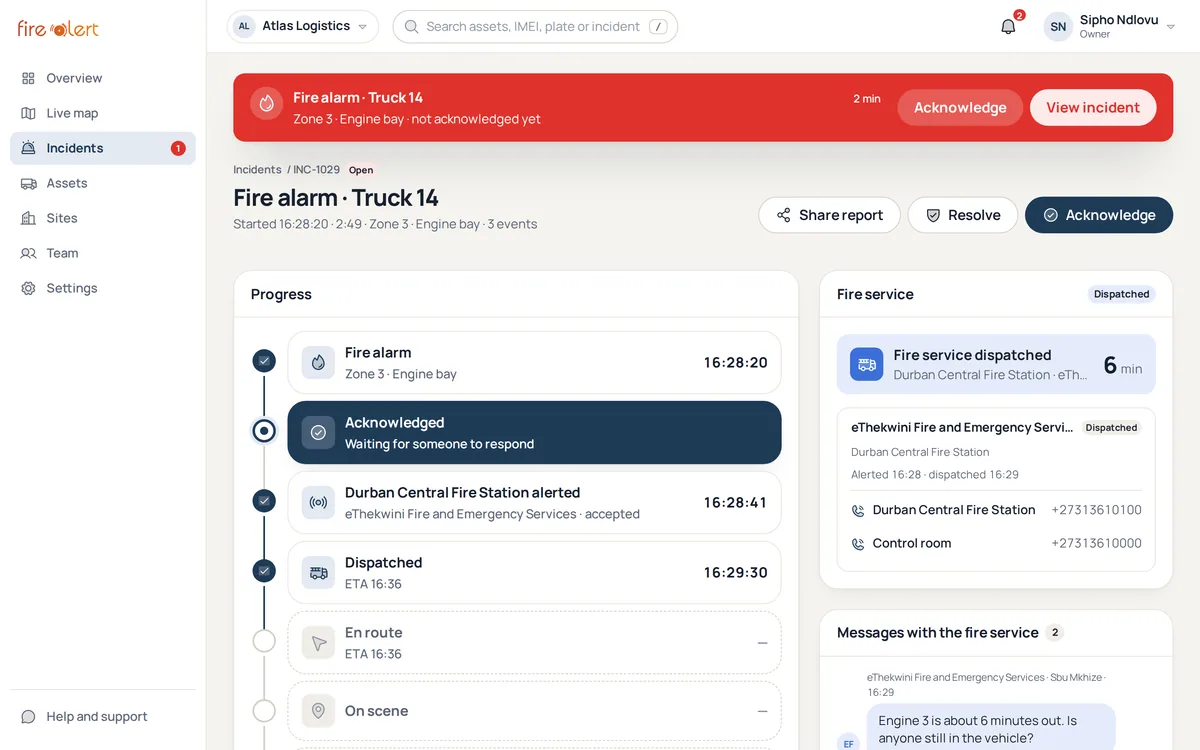
Each alarm keeps its timeline: who was alerted, on which channel, whether it was delivered, who acknowledged and what the fire service did.
Choose who is alerted at each stage, after how long and how. Push and email today; SMS, voice calls and WhatsApp are coming.
Battery, temperature, signal and last-seen for every device, temperature history per zone, and a list of what needs attention.
Invite your team with roles, set quiet hours and per-asset alerts, and keep emergency contacts with each vehicle or building.
Prepare pre-incident plans and access notes for each asset, and message the responding station directly from the incident.

Mobile app
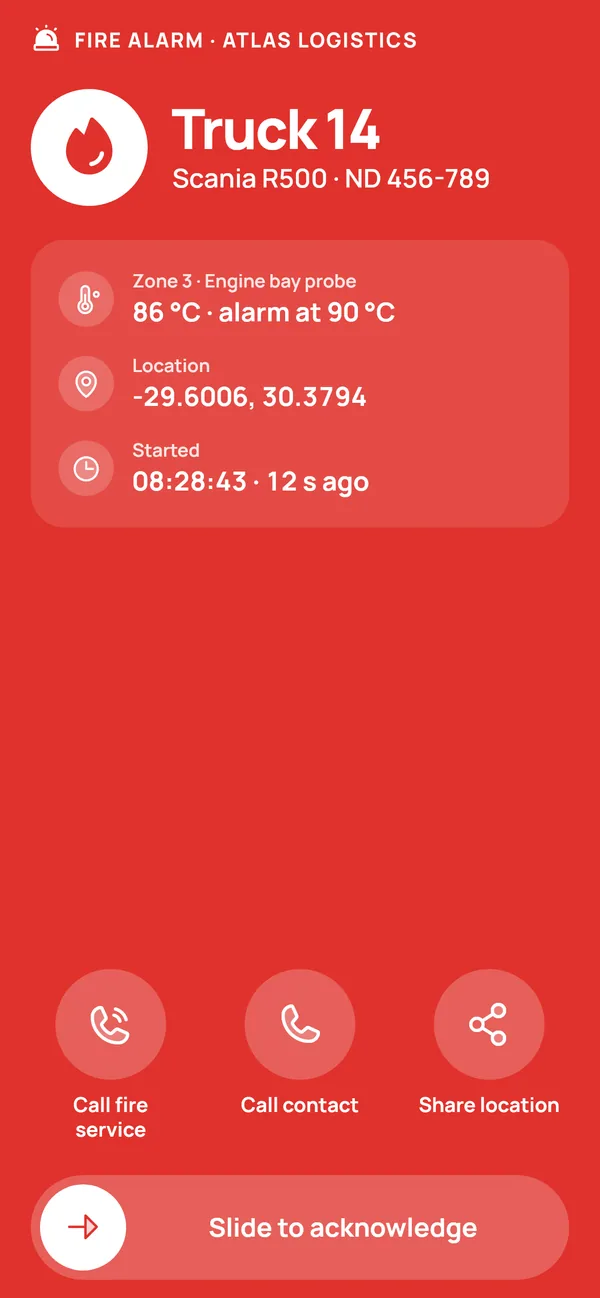
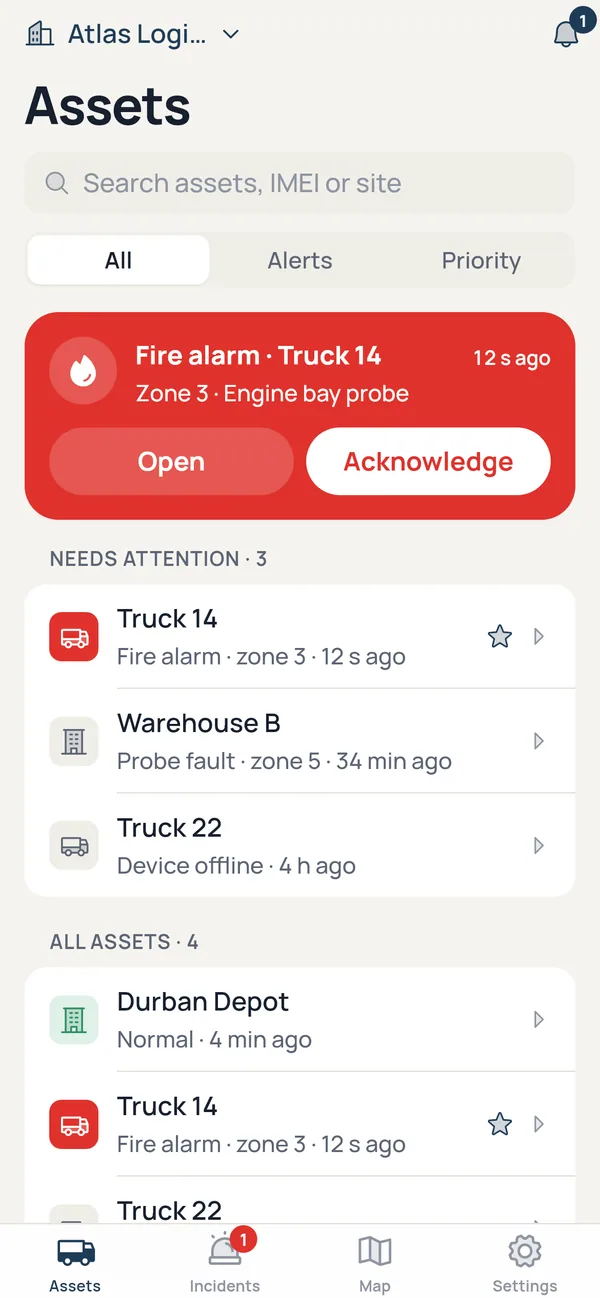
A fire alarm on your phone isn't just another notification. It takes over the screen, with everything you need to act.
For fire departments
When a monitored vehicle or building in your area raises a fire alarm, the console takes over with the asset, the owner, the distance and the live position.
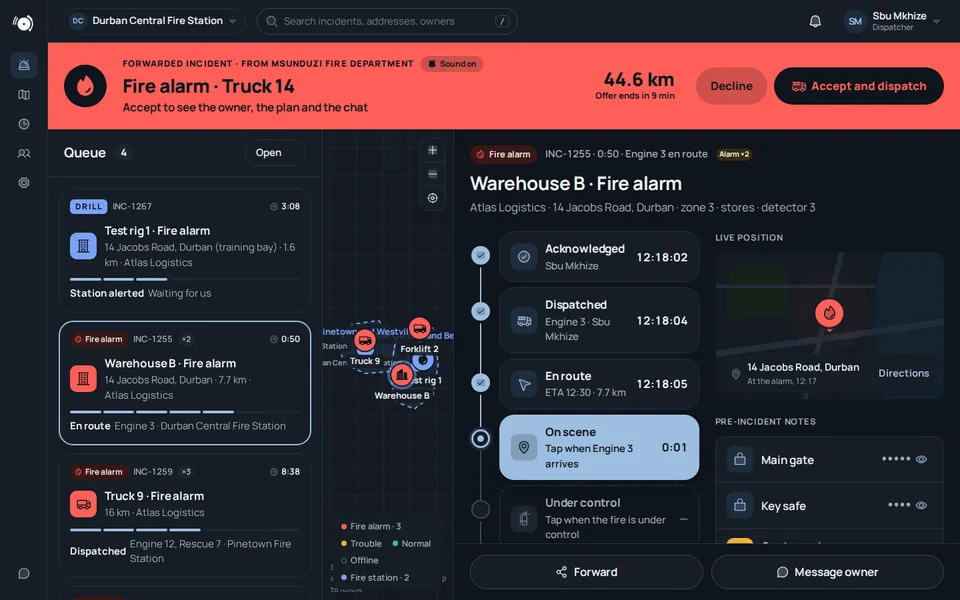
Accept the alarm, choose the appliance and track it through en route, on scene and under control.
The owner's pre-incident notes, access details and contacts, and a chat with the owner during the incident.
Pass an alarm to a neighbouring station with a reason and a note. It sees the offer and the distance.
Every callout with its outcome and timings, and an overview of your station's alarms over time.
Who it's for
Buses, coaches, haulage and machinery. Know about a fire on the road as it happens, wherever the vehicle is, with the position the fire service needs.
Warehouses, depots and sites. Alarms reach you after hours, and each building carries its address, zones and a pre-incident plan for the fire service.
See the owner appAlarms from monitored assets in your area arrive on a console built for the station, with the position, the owner and the plan.
See the station consoleHardware
Firealert devices are fitted in the vehicle or building and report to the platform over the mobile network. Your installer wires them to the sensors where fires start.
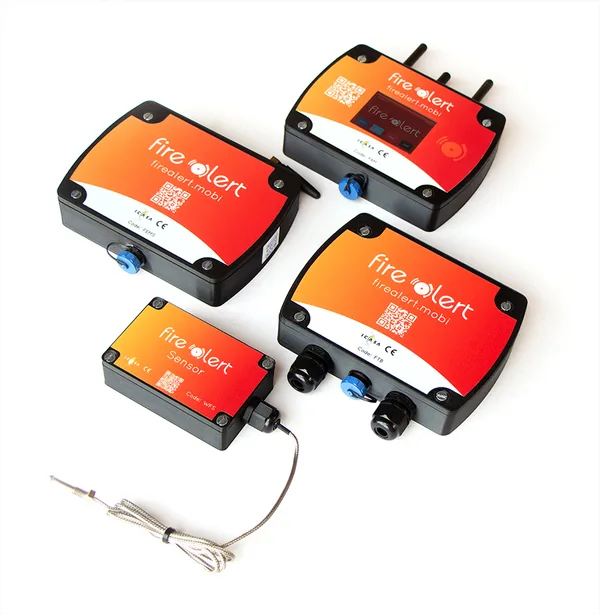
FAM
The main unit, with a display. It detects fire, reports alarms and readings, and sends its position.
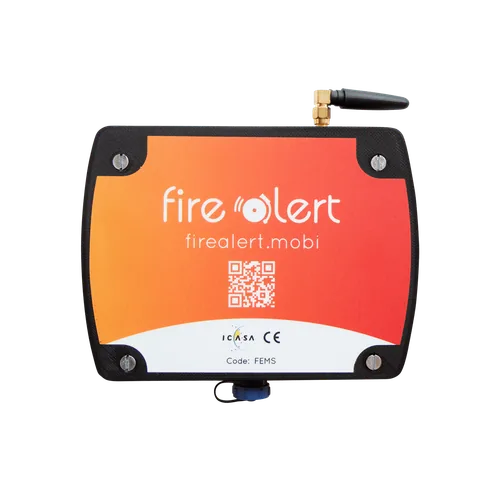
FEMS
Monitors water level, oil pressure, engine temperature and suppression cylinder pressure, with outputs for suppression release, a siren and engine cut.
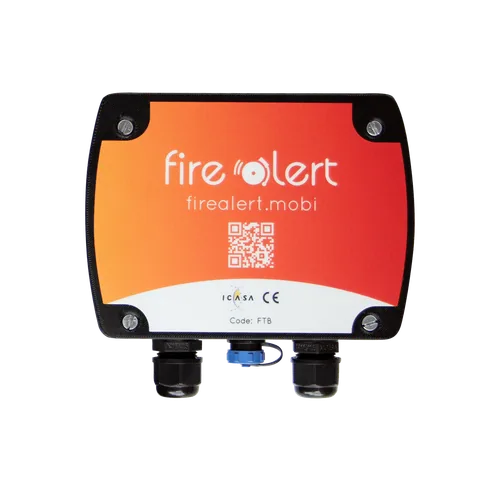
FTB
A sealed connection box that brings the inputs and outputs of the engine management unit together in one place.
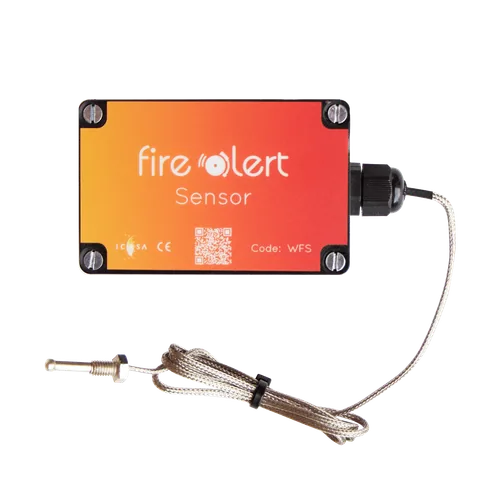
WFS
A wireless sender for temperature and health readings, fitted with a thermal probe, a linear heat cable or a relay input.
FAQ
Something else? Email hello@firemobile.dev.
No. Firealert detects alarms and makes sure the right people respond, quickly and on the record. It doesn't replace a fire suppression system.
The escalation ladder keeps going. Each stage alerts more people after the delay you choose, until someone acknowledges in the app, on the web or from the email link. The incident shows exactly who was alerted, how, and when.
Fire, smoke and panic alarms. Faults such as a low battery, a probe fault or a device that has gone quiet stay with your own team.
Yes. A building is an asset like a vehicle, with an address instead of a moving position, its zones, and a pre-incident plan for the fire service.
Yes. Invite your team with roles, put people on the stages of the ladder, set quiet hours, and choose alerts per asset. Everyone sees the same incident.
The iOS and Android apps are coming soon. The owner web app works today in any modern browser.
It depends on the hardware your vehicles or buildings need and how many assets you monitor. Book a demo and we’ll put together a quote in rand.
Book a demo and we’ll set off a test alarm, so you can watch it reach the phone, the team and the station console.